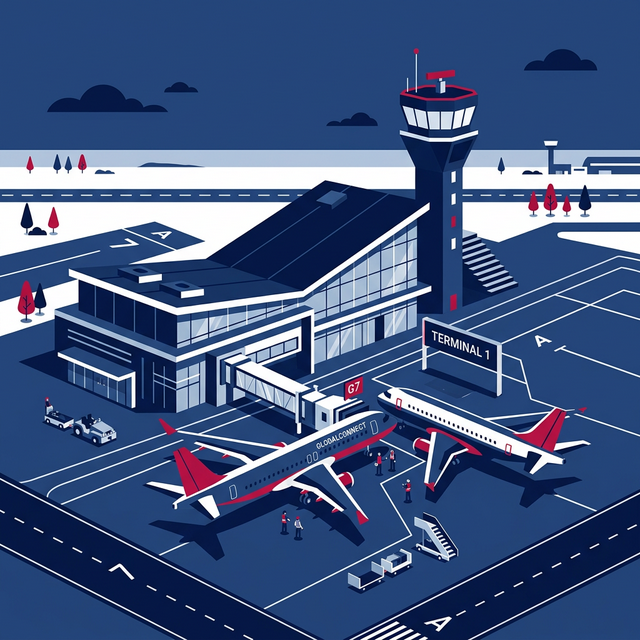
Sabiha Gökçen (SAW) Compensation
⚡ Key Takeaways for Sabiha Gökçen (SAW)
- AJet Base: SAW is the primary hub for AJet (AnadoluJet). Claims for SAW disruptions often involve low-cost-carrier excuses.
- Secondary Hub Delay: While smaller than IST, SAW congestion is high; slot delays are common but often due to airline mismanagement.
- Ground Handling: Baggage issues at SAW are frequent; the 'Montreal Convention' protects you for up to €1,600 in luggage damages.
If you were flying AJet out of SAW, you follow the same rules as Turkish Airlines mainline.
The Legal Reality of Sabiha Gökçen (SAW) Delays
Sabiha Gökçen International Airport (SAW), located on the Asian side of Istanbul, is a massive operational base for Turkish Airlines' low-cost subsidiary, AJet (formerly AnadoluJet), as well as many mainline domestic Turkish Airlines flights. Unlike the sprawling new IST airport, SAW has historically operated near its absolute capacity limits, leading to frequent congestion delays, taxi-way hold-ups, and ATC restrictions.
Because SAW is located outside the European Union, EC 261/2004 does NOT apply to flights departing from Sabiha Gökçen, even if you are flying to a European destination like Frankfurt, Amsterdam, or Vienna. Instead, your rights are dictated entirely by the Turkish Directorate General of Civil Aviation's (DGCA) SHY-PASS regulation.
"Flying AJet out of Sabiha Gökçen? AJet is legally bound by the exact same passenger rights laws (SHY-PASS) as its parent company, Turkish Airlines. Do not let them brush off your claim."
Your SHY-PASS Rights at SAW
Securing cash compensation under SHY-PASS can be complex, but the regulation is very strict regarding your Right to Care while stranded at the crowded SAW terminal. Turkish Airlines or AJet must provide the following, regardless of why the flight is delayed:
- 2-3 Hours: Hot and cold beverages.
- 3-5 Hours: Beverages plus a meal. At SAW, this is typically done via vouchers valid at the food court on the departures level.
- Overnight Delays: If your rebooked flight departs the next day, the airline is legally obligated to provide a free hotel room and transfer. Because SAW is on the Asian side, the hotels provided are usually in Pendik or Tuzla.
The Single-Runway Capacity Excuse
For many years, SAW operated as one of the busiest single-runway airports in the world. Even with recent expansion efforts, the airport space is tightly constrained. When you file a claim for a delayed AJet flight departing SAW, the airline will frequently blame "Air Traffic Control (ATC) restrictions" or "airport congestion."
Is Airport Congestion an Extraordinary Circumstance?
Airlines argue that ATC restrictions are outside their control. However, courts frequently rule that managing busy slots at a primary hub airport is an inherent operational reality of running an airline, not an "extraordinary circumstance." If the delay was caused by the airline's own scheduling failures within those tight slots, they must pay compensation.
- ❌ Official ATC Strike: If the air traffic controllers at SAW go on an official strike, grounding all flights, this is an extraordinary circumstance. No cash compensation is owed.
- ✅ Knock-on Delays: If your aircraft was delayed on a previous sector (e.g., from Antalya) and missed its strict takeoff slot at SAW, causing a massive subsequent delay, courts often classify this as an airline operational mismanagment. You are owed compensation.
What if I missed my flight because of SAW Security Lines?
Security and passport control lines at Sabiha Gökçen can be notoriously long, especially during the summer holiday peaks and Islamic holidays. If you miss your Turkish Airlines or AJet flight because you were stuck in the security queue, the airline is not liable for compensation or a free rebooking.
Under aviation law, it is solely the passenger's responsibility to arrive at the departure gate before it closes. We recommend arriving at SAW a minimum of 3 hours before international departures during peak seasons.

Did AJet deny your SAW delay claim?
Airlines count on you giving up when they send a confusing rejection email regarding ATC delays. Don't let them win. Let our legal team force them to pay your SHY-PASS claim.
AJet vs. Turkish Airlines at SAW: Is There a Difference?
Many passengers flying from Sabiha Gökçen are surprised to discover they are booked on AJet (IATA code: VF) rather than Turkish Airlines mainline (IATA code: TK). This is because SAW is AJet's primary operational base. From a legal standpoint, the rights are identical—AJet is a Turkish Airlines Group subsidiary and subject to the full scope of SHY-PASS. However, there are operational differences passengers should understand:
Baggage Delays and Damage at Sabiha Gökçen (SAW)
SAW's ground handling operation has historically generated a higher rate of baggage complaints than Istanbul Airport (IST). If your luggage is delayed, damaged, or lost on an AJet or Turkish Airlines flight arriving or departing from SAW, you are protected under the Montreal Convention, which provides a maximum liability of approximately €1,600 (1,288 SDR) per passenger.
- Lost Baggage: Report immediately at the SAW Lost & Found desk before leaving the terminal. You will receive a Property Irregularity Report (PIR)—this document is essential for your claim.
- Delayed Baggage: If your bag arrives 24+ hours after you do, keep all receipts for essential purchases (toiletries, clothing). The airline must reimburse these under the Montreal Convention.
- Damaged Baggage: Photograph the damage at the carousel before leaving the hall. Report to the desk and get a damage report. You have 7 days from receipt to file a formal claim.
Delayed at Sabiha Gökçen Airport?
Whether delayed by AJet or Turkish Airlines mainline, SHY-PASS gives you the right to demand cash compensation. AirAdvisor's legal team specialises in SAW claims—no win, no fee.
Sabiha Gökçen (SAW) Compensation FAQ
My AJet flight from SAW to Frankfurt was delayed 4 hours. Is AJet bound by SHY-PASS?
Yes, absolutely. AJet (formerly AnadoluJet) is a Turkish Airlines Group subsidiary and is fully bound by SHY-PASS in all its provisions. A 4-hour delay on a SAW–Frankfurt flight (over 2,500 km) that was not caused by extraordinary circumstances entitles you to the equivalent of approximately €400 in Turkish Lira compensation. AirAdvisor can pursue this for you.
Is Sabiha Gökçen's SAW airport covered by EU261 for flights to Europe?
No. SAW is located outside the European Union in Turkey, and EU261 only applies to flights departing from EU airports, or flights arriving at the EU on EU-based carriers. Flights departing SAW for Europe on Turkish Airlines or AJet (both non-EU carriers) are governed by SHY-PASS, not EU261. However, if a European airline—such as Ryanair or easyJet—operates a flight from SAW, EC 261 does apply to those passengers.
AJet's delay at SAW caused me to miss a connecting international flight at a European airport. What are my rights?
This scenario requires careful analysis. If you hold a single through-ticket (one PNR/booking reference) covering your entire journey from SAW through Istanbul to the European airport and then onward, the entire journey is protected. Turkish Airlines/AJet must rebook you to your final destination and pay SHY-PASS compensation based on your total delay. If the European leg is on a separate ticket with a European carrier, that carrier's rights (EC 261) apply from the EU airport onward. Contact AirAdvisor to untangle the specific liability in your case.
Written & Legally Reviewed by Anton Radchenko
Anton is the CEO and Lead Aviation Attorney at AirAdvisor. With over a decade of experience, he has successfully secured compensation for over 250,000 passengers against major airlines globally.