Missing Connection Due to Slow Disembarkation
⚡ Key Takeaways for Missing Connection Due to Slow Disembarkation
- Airline Fault: If the plane lands on time but the 'stairs/bridge' are slow (operational issue), and you miss a connection, TK is liable.
- Legal Ground: The European Court has ruled that disembarkation is part of the 'flight'. If staff are slow, the €600 payout applies.
- Evidence: Record the time the doors opened; if it's 30 mins after landing and you miss your flight, it's an operational failure.
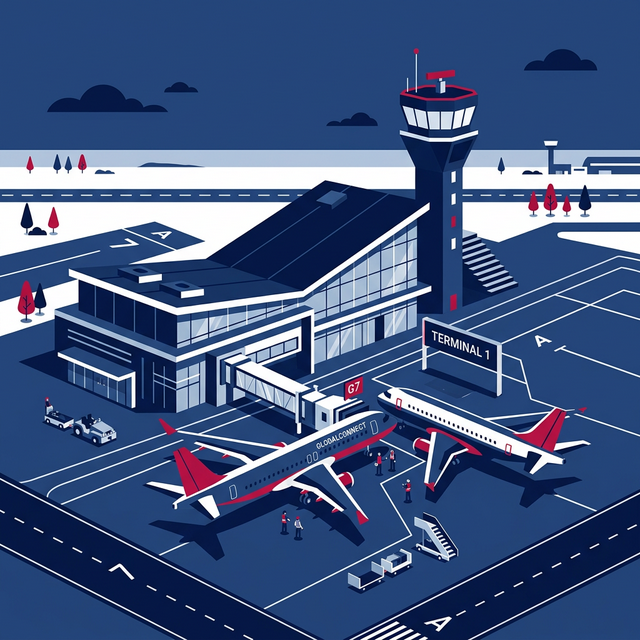
The anxiety of a short connecting flight is a universal travel experience. You spend the entire four-hour flight constantly checking your watch. When your Turkish Airlines flight finally touches the runway at Istanbul Airport (IST) with exactly 55 minutes to spare before your onward flight to Tokyo departs, a massive wave of relief washes over you. You made it. However, that relief instantly evaporates when the aircraft parks not at a terminal jet bridge, but at a remote tarmac stand. You wait 15 minutes for the stairs to be attached. You wait another 20 minutes packed onto a sweltering transfer bus. By the time you finally clear transit security and sprint to the departure gate, the doors to your Tokyo flight are locked. The airline staff shrug and tell you that you simply didn't run fast enough. But a monumental legal precedent protects you in this exact scenario: Slow disembarkation leading to a missed connection is entirely the airline's legal fault.
1. The Crucial Legal Definition of "Arrival Time"
The entire legal battle regarding a missed connection hinges on one highly specific metric: the official time of arrival. Airlines historically manipulated this metric to avoid paying millions in statutory compensation. If Turkish Airlines scheduled an arrival for 14:00, and the wheels touched the runway at 13:58, the airline's internal computer systems automatically logged the flight as "On Time."
However, touching the runway means absolutely nothing to a passenger trapped in row 35.
The "Doors Open" Precedent
In a landmark, universally binding
decision, the European Court of Justice (ECJ) shattered the airlines' defense. The court legally
defined "Arrival Time" not as the moment the aircraft lands, and
not as the moment the parking brakes are applied at the gate (Block Time). The
ECJ ruled that arrival officially occurs only at the precise moment at least one passenger
door is opened, thereby granting passengers the physical opportunity to exit the
aircraft.
If the wheels touched the tarmac at 13:58, but the door was not opened to allow
disembarkation until 14:45 due to severe ground crew shortages, your flight legally arrived 45
minutes late.
2. Remote Stands and the Istanbul (IST) Bus Nightmare
The sheer, colossal scale of the new Istanbul Airport (IST) significantly exacerbates disembarkation delays. While the terminal building is massive, Turkish Airlines operates hundreds of daily flights, frequently exhausting the available physical jet bridges during peak hours.
When your aircraft is directed to a "remote stand," you become highly vulnerable to third-party ground operations failures. The aircraft cannot open its doors until the motorized boarding stairs arrive. Passengers cannot disembark the stairs until the transit buses pull up. If the ground handling company (like Havas or TGS) is understaffed, you are held hostage inside the aluminum tube.
Under both European (EC 261/2004) and Turkish (SHY-PASS) aviation law, ground handling delays are entirely the responsibility of the operating airline. Turkish Airlines cannot legally blame a third-party steering company for the bus taking 30 minutes to arrive. It is classified as an "operational deficiency," not an extraordinary circumstance.

3. Beating the "Passenger Loitered" Defense
When you file a €600 compensation claim for a missed connection, the initial automated rejection from Turkish Airlines' customer relations team is highly predictable. They will review their ACARS data, note that the flight landed relatively on time, and boldly assert that you, the passenger, are at fault for failing to navigate the transfer terminal efficiently.
The Minimum Connection Time (MCT) Violation
Every major airport dictates a specific Minimum Connection Time (MCT) for transferring between international flights. At IST, this is typically set around 60 to 75 minutes. When you book a single ticket through Turkish Airlines, they guarantee your itinerary adheres to this MCT. If slow disembarkation eats up 40 minutes of your 65-minute layover, they have mathematically violated the MCT guarantee. You physically could not have made the flight, rendering their "passenger at fault" defense legally null and void.
What Are You Owed?
If severe ground delays trap you on the aircraft, causing you to arrive at the departure gate as the bridge pulls away, Turkish Airlines owes you two distinct categories of legal restitution.
1. Mandatory Statutory Compensation (€600)
Under EC 261, if the missed connection forces TK to rebook you on a later flight, and that sequence results in you arriving at your final, ultimate destination more than 3 hours late, you are owed up to €600 in cash. It is irrelevant if the first flight was technically "on time" regarding touchdown.
2. The Urgent Right to Care
Because Turkish Airlines caused the missed connection, they must physically care for you during the wait for the replacement flight. This includes comprehensive meal vouchers, free communications, and a fully paid hotel room if the rebooking is pushed to the following day.
4. Secondary Consequence: The Luggage Severance
When you sprint through a massive transfer terminal to barely catch a delayed connection, your physical body might make the flight, but the airline's automated baggage sorting system almost certainly will not. Slow disembarkation is the primary driver of delayed luggage claims on multi-leg itineraries.
If you arrive in Paris, but your suitcase is still sitting on the tarmac under a transfer bus in Istanbul, you are immediately protected by the Montreal Convention. You possess the legal right to purchase daily essential replacement items (toiletries, changes of clothes, business wear) up to approximately $1,700, and Turkish Airlines is legally mandated to reimburse these expenses upon submission of the itemized receipts. Do not accept a mere 'apology amenity kit' at the baggage carousel.
5. Gathering Irrefutable Evidence
Because Turkish Airlines will aggressively defend against slow disembarkation claims by pointing to the "on-time landing" data, the burden of proof shifts heavily to the passenger to document the ground failure. If you are sitting on the tarmac watching your connection window vanish, execute the following evidence-gathering protocol:
- The Door Timestamp: Use your phone to take a photograph of the cabin door the exact second it is finally opened. Ensure the photo contains metadata (time and geo-location). This is your ultimate weapon against the ECJ arrival definition.
- The Bus Timestamp: If held on a transfer bus, take a photo showing the bus idling outside the terminal, again capturing the precise timestamp.
- The Gate Rejection: When you run to the connection gate and are denied boarding, photograph the departures screen above the desk showing the flight status (e.g., "Gate Closed"). Politely demand the gate agent state the exact time on the record.
- Witness Correlation: Identify other passengers on your flight rushing to the exact same connection. Exchange email addresses to corroborate the collective ground delay failure.
The Claims Escalation Reality:
Filing a pro-se (do-it-yourself) claim for a missed connection caused by slow disembarkation is incredibly difficult because you are arguing against the airline's internal logistics logs. They will send you an automated rejection insisting the flight arrived "on time." Do not accept this. By utilizing professional aviation attorneys who can subpoena internal ACARS door-opening data and correlate it with the established legal framework of the European Court of Justice, passengers can easily shatter the airline's defense and secure the €600 payout they are rightfully owed.
Written & Legally Reviewed by Olha Habestro
Olha leads the Customer Support team at AirAdvisor. Her deep understanding of airline claim processes and passenger rights ensures that every traveler receives timely and accurate legal guidance for their disruptions.